
Complete Guide to Credit Card Payment Gateways
November 18, 2025
Every online purchase relies on a hidden enabler working behind the scenes. A single failed payment can mean a lost sale, which is why over 80 percent of businesses now depend on digital payment gateways for secure transactions. Choosing the right gateway is more than a technical task—it shapes customer trust and affects your bottom line. Understanding how these systems work gives you the power to create a safer, smoother experience for both your business and your customers.
Table of Contents
- What Are Credit Card Payment Gateways?
- Types Of Payment Gateways And How They Differ
- Key Features And Supported Payment Methods
- Integration With Pos Systems And Platforms
- Security Standards, Compliance, And Risks
- Costs, Processing Fees, And Choosing A Gateway
Key Takeaways
| Point | Details |
|---|---|
| Functionality | Payment gateways serve as crucial intermediaries that authenticate and process financial transactions securely, thereby enabling seamless online and in-store payments. |
| Types and Selection | Various types of payment gateways, such as hosted and integrated, cater to different business needs; careful selection based on specific operational requirements is essential. |
| Security Standards | Robust security measures, including PCI DSS compliance and end-to-end encryption, are critical for protecting sensitive transaction data and preventing fraud. |
| Cost Considerations | Businesses should evaluate a range of costs associated with payment gateways, including transaction fees and monthly charges, to optimize financial performance. |
What Are Credit Card Payment Gateways?
A credit card payment gateway is the digital intermediary that securely connects merchants, customers, and financial institutions during online and in-store transactions. According to trade.gov, these technological bridges authorize and process electronic payments by transmitting transaction data between the merchant’s point of sale system and the customer’s bank.
At its core, a payment gateway functions like a virtual point-of-sale terminal, performing several critical tasks in milliseconds:
- Encrypting sensitive payment information
- Authorizing transactions in real-time
- Routing transaction data through secure financial networks
- Validating customer payment credentials
The payment gateway’s role extends far beyond simple transaction processing. gorspa.org highlights that these systems act as crucial security checkpoints, implementing multiple layers of fraud prevention and ensuring that every digital transaction meets stringent financial compliance standards.
For modern businesses, especially those operating across multiple sales channels, payment gateways represent more than just a transactional tool. They are sophisticated technological platforms that enable seamless, secure, and swift payment experiences. By supporting multiple payment methods, integrating with various point-of-sale systems, and providing real-time transaction insights, payment gateways have become indispensable infrastructure for retailers navigating the complex digital commerce landscape.
Types of Payment Gateways and How They Differ
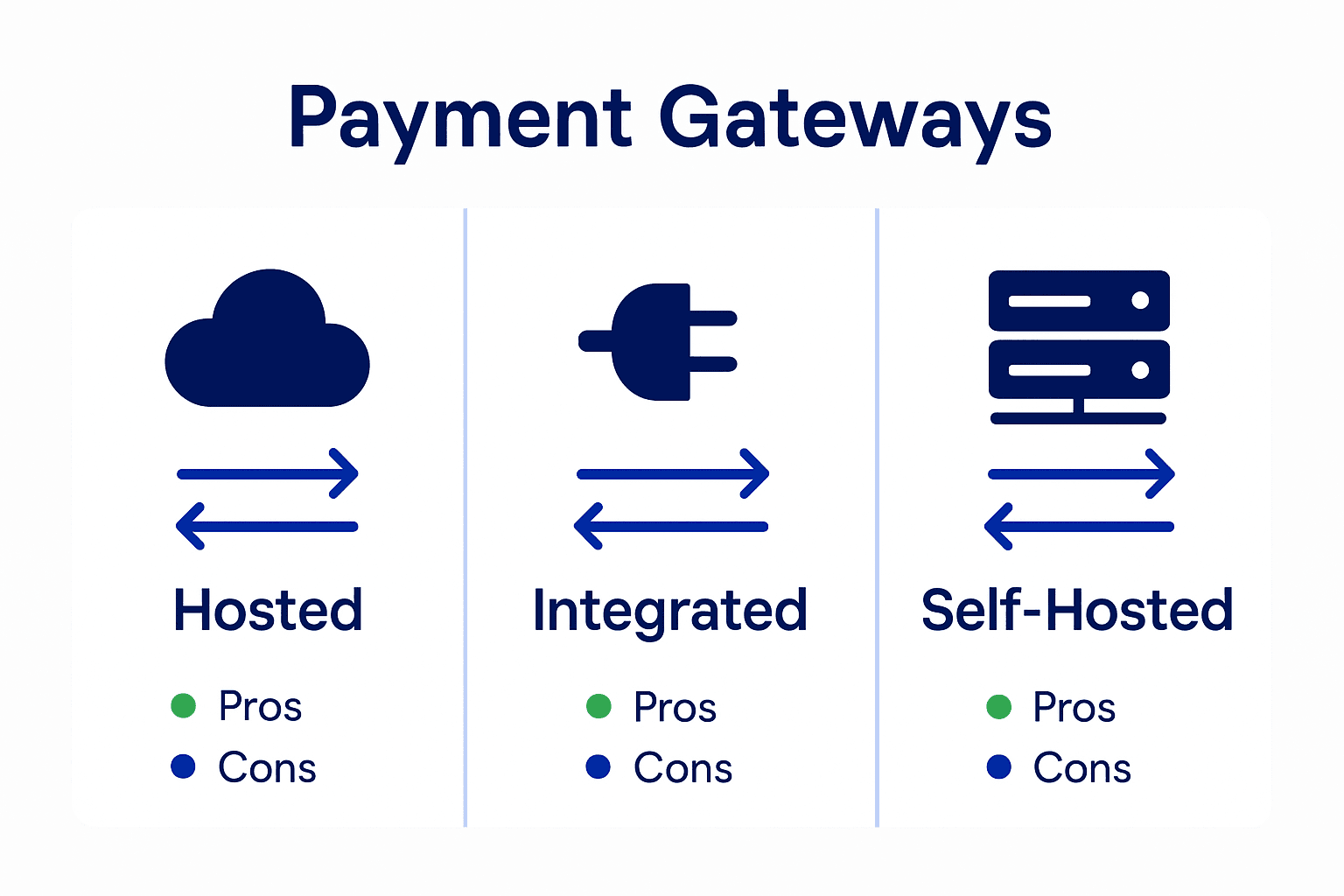
Payment gateways are not one-size-fits-all solutions. gorspa.org highlights that different types of payment gateways serve unique business needs, with distinct implementation strategies and security frameworks. Understanding these variations is crucial for selecting the right payment infrastructure.
The primary types of payment gateways include:
- Hosted Gateways: Third-party platforms where transactions occur on an external website
- Integrated Gateways: Seamlessly embedded within a merchant’s existing website or application
- Self-Hosted Gateways: Complete in-house solutions offering maximum control and customization
- Local Bank Integrations: Direct connections with specific banking networks
According to trade.gov, the key differentiator among these gateway types lies in their transaction routing and security mechanisms. Direct gateways offer more control but require significant technical infrastructure, while aggregator gateways provide easier setup with shared transaction environments.
Beyond technical distinctions, payment gateways vary in critical aspects like transaction fees, security protocols, and integration complexity. A small e-commerce startup might prefer a simple hosted solution, whereas an enterprise-level retailer would likely opt for a customizable integrated gateway that provides granular transaction insights and robust fraud prevention capabilities.
 SensePass’s guide on payment gateway types can help businesses navigate these nuanced choices and find the most suitable payment infrastructure for their specific operational needs.
Key Features and Supported Payment Methods
gorspa.org reveals that modern payment gateways are sophisticated technological ecosystems packed with critical features designed to secure and streamline financial transactions. These platforms go far beyond simple payment processing, offering comprehensive solutions that address the complex needs of today’s digital businesses.
Key features of advanced payment gateways typically include:
- Robust Encryption: Protecting sensitive financial data in transit
- Multi-Layer Fraud Detection: Real-time transaction monitoring and risk assessment
- Token Management: Securely storing payment credentials for recurring transactions
- Multiple Currency Support: Enabling global transaction capabilities
- Detailed Reporting: Providing granular insights into transaction patterns
According to scitepress.org, the authentication mechanisms embedded in modern payment gateways represent a critical shield against unauthorized transactions. These systems employ advanced techniques like device fingerprinting, behavioral analysis, and machine learning algorithms to distinguish legitimate transactions from potential security threats.
SensePass’s guide on payment gateway features highlights the evolving landscape of supported payment methods. Modern gateways now support an extensive array of payment options beyond traditional credit cards, including digital wallets, cryptocurrencies, buy-now-pay-later services, and direct bank transfers. This flexibility allows businesses to meet diverse customer preferences and expand their potential market reach by accommodating multiple payment preferences in a single, integrated platform.

Integration With POS Systems and Platforms
gorspa.org reveals that payment gateway integration with Point of Sale (POS) systems represents a complex technological symphony, connecting hardware, software, and financial networks to enable seamless transaction processing. This integration transforms traditional payment infrastructure into a dynamic, interconnected ecosystem capable of handling diverse transaction types across multiple channels.
The integration process typically involves several critical components:
- API Connectivity: Establishing secure communication protocols between payment gateways and POS systems
- Data Synchronization: Ensuring real-time transaction information exchange
- Protocol Standardization: Implementing uniform communication standards across different platforms
- Security Handshakes: Creating encrypted communication channels
- Transaction Routing: Directing payments through appropriate financial networks
According to ncosc.gov, modern payment gateways must demonstrate remarkable adaptability, supporting integration with a wide range of platforms including traditional retail POS, mobile point-of-sale systems, e-commerce platforms, and emerging omnichannel sales environments.
SensePass’s guide on payment system integration highlights that successful integration goes beyond technical compatibility. It involves creating a unified transaction experience that supports multiple payment methods, provides comprehensive reporting, and enables businesses to seamlessly connect their financial ecosystems across physical and digital touchpoints.
Security Standards, Compliance, and Risks
gorspa.org reveals that payment gateway security represents a critical battleground in protecting financial transactions from increasingly sophisticated cyber threats. The landscape of digital payment security is characterized by complex, multi-layered defense mechanisms designed to safeguard sensitive financial information across every stage of transaction processing.
Key security standards and compliance requirements include:
- PCI DSS Compliance: Mandatory security standards for handling credit card data
- End-to-End Encryption: Protecting data transmission across networks
- Tokenization: Replacing sensitive card details with unique identification symbols
- Multi-Factor Authentication: Verifying user identities through multiple validation methods
- Real-Time Fraud Detection: Monitoring transactions for suspicious patterns
According to scitepress.org, modern payment gateways employ advanced authentication techniques that go beyond traditional security measures. These include behavioral biometrics, machine learning algorithms, and sophisticated risk scoring models that can identify potential fraudulent activities within milliseconds of a transaction initiation.
SensePass’s guide on payment security emphasizes that effective risk management is not just about preventing breaches, but creating a comprehensive security ecosystem. This involves continuous monitoring, regular security audits, adaptive threat response mechanisms, and maintaining a proactive approach to emerging cybersecurity challenges that can compromise financial transactions.
Costs, Processing Fees, and Choosing a Gateway
gorspa.org reveals that understanding payment gateway costs is far more nuanced than simply comparing headline pricing. Businesses must navigate a complex landscape of fee structures, including transaction fees, monthly charges, setup costs, and potential hidden expenses that can significantly impact overall financial performance.
Typical payment gateway cost components include:
- Per-Transaction Fees: Typically ranging from 2.5% to 3.5% plus a fixed amount
- Monthly Subscription Fees: Flat rates for gateway access and maintenance
- Setup Costs: Initial integration and configuration expenses
- Chargeback Fees: Costs associated with disputed transactions
- Currency Conversion Fees: Additional charges for international transactions
According to trade.gov, selecting the right payment gateway requires a holistic assessment beyond mere pricing. Businesses must evaluate factors like transaction volume, average ticket size, industry-specific requirements, integration complexity, and long-term scalability when making their selection.
SensePass’s guide on reducing credit card processing fees emphasizes that smart gateway selection can lead to substantial cost savings. This involves negotiating rates, understanding fee structures, implementing efficiency-driven technologies, and regularly auditing payment processing expenses to optimize financial performance.
Elevate Your Payment Gateway Experience with SensePass
Navigating the complexities of credit card payment gateways requires more than just basic transaction processing. With challenges like integrating multiple payment methods, ensuring top-tier security, and syncing seamlessly with various POS systems, businesses need a reliable partner to simplify and strengthen their payment ecosystem. SensePass answers this call by offering a processor-agnostic platform that supports over 50 card processors, empowering retailers with unmatched flexibility and control.
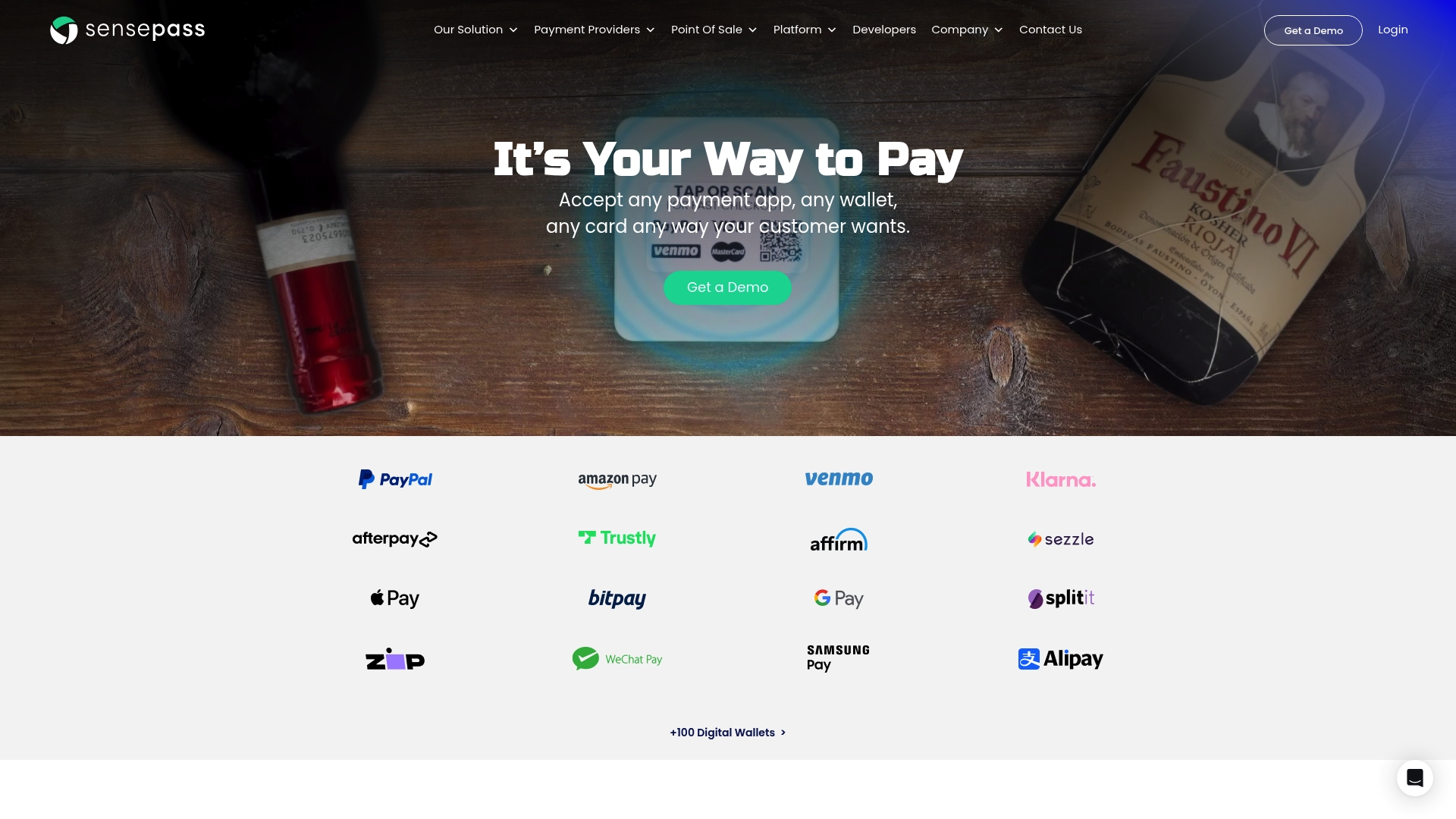
Whether you operate in-store, online, or through call centers, SensePass integrates effortlessly with leading platforms such as NetSuite, SuiteCommerce, Oracle Xstore, Aptos, Shopify POS, BigCommerce, Storis, NCR, and Dynamics365. Our system embraces a broad range of payment options including digital wallets like PayPal, Apple Pay, and Google Pay, BNPL providers such as Klarna and Afterpay, flexible financing through Affirm and WeGetFinancing, crypto payments with BitPay and Coinbase, and seamless bank payments via Trustly and LinkMoney. This all-in-one solution helps you reduce processing fees while enhancing customer checkout experiences.
Discover how to transform your payment operations with SensePass and unlock a reliable, secure, and versatile payment gateway.
Struggling to unify your payment methods and POS systems? Let SensePass simplify every transaction for you!
Explore the future of omnichannel payments today and see how your retail business can flourish with streamlined integration and expansive payment flexibility at SensePass. Don’t wait to upgrade your payment gateway and boost customer satisfaction now.
Learn more about our technology and supported platforms at SensePass Payment Solutions and start your seamless integration journey.
Frequently Asked Questions
What is a credit card payment gateway and how does it work?
A credit card payment gateway is a digital intermediary that securely connects merchants, customers, and financial institutions during online and in-store transactions. It encrypts sensitive payment information, authorizes transactions in real-time, and routes transaction data through secure financial networks.
What are the different types of payment gateways?
There are several types of payment gateways, including hosted gateways (where transactions occur on an external site), integrated gateways (embedded within a merchant’s site), self-hosted gateways (in-house solutions), and local bank integrations (direct connections with banking networks).
What features should I look for in a payment gateway?
Key features to consider include robust encryption, multi-layer fraud detection, token management for recurring transactions, multi-currency support for global transactions, and detailed reporting for transaction insights.
How do payment gateway costs and fees work?
Payment gateway costs can include per-transaction fees (usually 2.5% to 3.5% plus a fixed amount), monthly subscription fees, setup costs, chargeback fees, and currency conversion fees. It’s important to assess these factors holistically for effective budget management.
Recommended
- Understanding the Payment Gateway Checklist for Businesses – Omnichannel payments at the Point Of Sale | Sensepass
- Credit Card Payment Gateway: Complete Retail Guide – Omnichannel payments at the Point Of Sale | Sensepass
- 7 Types of Payment Gateways to Elevate Your Business – Omnichannel payments at the Point Of Sale | Sensepass
- Understanding Authorize Payment Gateway for Businesses – Omnichannel payments at the Point Of Sale | Sensepass

 New York Office
260 Madison Ave Suite 8018 New York NY 10016

