
Retail Payment Workflow Optimization for Seamless Omnichannel Sales
December 18, 2025
Most American retailers now support over five different payment methods, yet studies show many still lose sales due to friction at checkout. As the way customers shop keeps evolving, optimizing payment workflows has never been more critical. From in store purchases to online and mobile transactions, this guide gives you a clear roadmap for creating a seamless, efficient system that improves customer experiences and boosts profitability.
Table of Contents
- Step 1: Assess Retail Payment Needs Across All Channels
- Step 2: Integrate SensePass With POS and eCommerce Platforms
- Step 3: Enable Broad Payment Method Support for Customers
- Step 4: Streamline Payment Routing and Processor Selection
- Step 5: Test and Validate Payment Workflow Performance
Quick Summary
| Key Insight | Explanation |
|---|---|
| 1. Conduct a Thorough Payment Audit | Map your current payment workflow to identify gaps and inefficiencies across all channels. |
| 2. Integrate Diverse Payment Methods | Support various payment types to meet modern customer expectations and improve sales conversion. |
| 3. Optimize Payment Routing | Use intelligent routing strategies to minimize transaction costs and enhance payment performance. |
| 4. Implement Comprehensive Testing | Develop rigorous testing strategies to validate payment workflows and ensure smooth transactions. |
| 5. Create a Payment Channel Matrix | Design a detailed matrix to understand transaction scenarios, including edge cases like returns. |
Step 1: Assess Retail Payment Needs Across All Channels
Assessing your retail payment workflow requires a systematic approach to understanding how transactions flow across multiple sales channels. Your goal is to create a comprehensive map of payment interactions that identifies gaps, inefficiencies, and opportunities for optimization.
Start by conducting a thorough audit of your current payment ecosystem. This means examining every touchpoint where customers might make a purchase: in store, online, via mobile app, through call centers, and even emerging channels like social media commerce. Measuring retail payment costs and ecosystem dynamics provides critical insights into understanding transaction complexity. Track transaction volumes, average order values, preferred payment methods, and processing times for each channel. Pay special attention to how different customer segments interact with your payment systems.
Analyze your current technology infrastructure to determine integration capabilities. SensePass supports seamless connections with major platforms like NetSuite, SuiteCommerce, Shopify POS, and Dynamics365, which can help bridge potential gaps in your payment workflow. Examine your existing point of sale systems, payment gateways, and processor relationships to identify potential bottlenecks or areas requiring modernization.
Pro tip: Create a detailed payment channel matrix that maps out every possible transaction scenario, including edge cases like returns, partial payments, and cross-channel exchanges. This comprehensive view will help you design a truly adaptive payment strategy.
Here’s how common payment methods align with sales channel needs:
| Payment Method | In Store Suitability | Online/Mobile Suitability | Customer Experience Impact |
|---|---|---|---|
| Digital Wallets | Quick tap, high adoption | Fast checkout, secure | Streamlined, modern |
| Buy Now Pay Later | Upsell at POS, flexible | Boosts cart size, easy integration | More purchasing power |
| Cryptocurrency | Emerging, niche demand | Appeals to tech-savvy buyers | Innovation perception |
| Traditional Card | Ubiquitous, reliable | Widely supported, secure | Familiar process |
| Store Credit/Rewards | Drives loyalty, repeat use | Enhances retention, incentives | Increased engagement |
Step 2: Integrate SensePass With POS and eCommerce Platforms
Integrating SensePass with your point of sale and eCommerce platforms transforms your payment infrastructure into a powerful omnichannel ecosystem. Your objective is to create a seamless connection that supports multiple transaction types across different sales channels while maintaining consistent performance and user experience.
Begin by mapping out your current technology stack and identifying compatible platforms. Point of sale systems have evolved significantly and require careful consideration during integration. SensePass provides native integrations with major platforms including NetSuite, SuiteCommerce, Shopify POS, BigCommerce, Dynamics365, Oracle Xstore, and Aptos. This processor agnostic approach allows you to connect with over 50 card processors, giving you maximum flexibility. Evaluate your specific platform requirements and verify compatibility using SensePass technical documentation.
The integration process involves configuring payment method settings, establishing secure API connections, and testing transaction workflows across all supported channels. SensePass supports an extensive range of payment methods including digital wallets (PayPal, Apple Pay, Google Pay), buy now pay later services (Klarna, Afterpay), cryptocurrency options (BitPay, Coinbase), and traditional card payments. Ensure your integration accommodates these diverse payment types to provide customers with maximum convenience.

Pro tip: Schedule a comprehensive integration test that simulates real world transaction scenarios across every sales channel to identify and resolve potential connectivity issues before going live.
Step 3: Enable Broad Payment Method Support for Customers
Expanding your payment method options is critical for meeting modern consumer expectations and maximizing sales potential. Your goal is to create a flexible payment ecosystem that accommodates diverse customer preferences and purchasing behaviors.
Consumer demand for self service payment options continues to grow across retail environments. SensePass supports an extensive array of payment methods to help you meet these evolving expectations. Your strategy should include digital wallets (Apple Pay, Google Pay, PayPal, Venmo), buy now pay later services (Klarna, Afterpay, Sezzle), financing options (Affirm, WeGetFinancing), cryptocurrency payments (BitPay, Coinbase), and traditional card transactions. By offering multiple payment channels, you reduce friction in the purchasing process and increase the likelihood of completed sales.
Implement these payment methods strategically across all your sales channels including in store, online, mobile app, and call center platforms. Ensure your integration provides a consistent user experience by maintaining uniform branding, smooth transaction flows, and secure processing. SensePass enables processor agnostic connections with over 50 card processors and supports integrations with major platforms like NetSuite, Shopify, BigCommerce, and Dynamics365 to simplify this complex implementation.
Pro tip: Regularly survey your customers about their preferred payment methods and monitor transaction data to continuously refine and expand your payment options for maximum conversion potential.
Step 4: Streamline Payment Routing and Processor Selection
Optimizing your payment routing and processor selection is a critical strategy for reducing transaction costs and improving overall payment performance. Your goal is to create an intelligent routing system that maximizes efficiency and minimizes processing expenses.
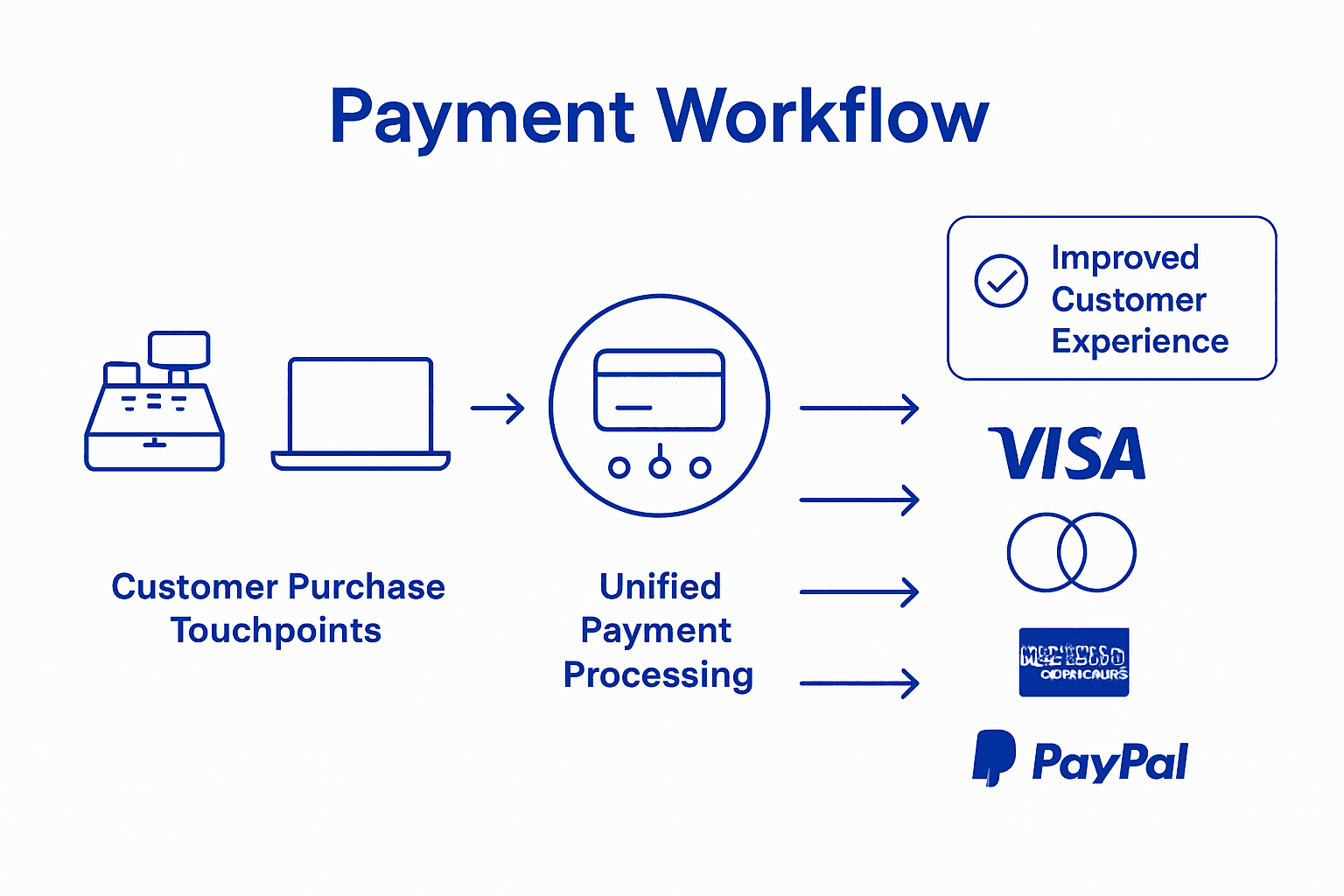
Merchant surveys highlight the growing importance of advanced payment technology upgrades across retail environments. SensePass offers a processor agnostic approach that allows you to dynamically route transactions through multiple processors based on complex criteria such as transaction type, card network, processing fees, and approval rates. This intelligent routing can significantly reduce your overall transaction costs by selecting the most economical processing path for each payment.
Implement a sophisticated routing strategy that considers multiple factors beyond simple cost comparisons. Evaluate processors based on approval rates, processing speeds, fraud detection capabilities, and compatibility with your specific transaction types. SensePass supports connections with over 50 card processors, enabling you to create a flexible routing matrix that adapts to changing market conditions and your specific business requirements. Leverage machine learning algorithms to continuously optimize your routing rules, ensuring you always select the most efficient processing path for each transaction.
Pro tip: Create a quarterly review process to analyze your payment routing performance, comparing processor costs, approval rates, and transaction success metrics to continuously refine your payment strategy.
Consider these key factors when selecting a payment processor:
| Factor | Why It Matters | Potential Business Benefit |
|---|---|---|
| Approval Rate | Reduces declined sales | Higher order completion |
| Processing Fees | Directly affects margins | Greater profitability |
| Transaction Speed | Impacts user satisfaction | Shorter customer wait times |
| Fraud Detection | Minimizes risk of chargebacks | Lower fraud-related losses |
| Platform Integration | Simplifies implementation | Faster time to market |
Step 5: Test and Validate Payment Workflow Performance
Validating your payment workflow performance ensures seamless transaction experiences and identifies potential bottlenecks before they impact your business. Your objective is to create a comprehensive testing strategy that validates every aspect of your payment processing infrastructure.
Managing retail operations requires rigorous performance testing to provide exceptional customer experiences. Develop a multi staged testing approach that covers transaction scenarios across all channels. This includes simulating transactions through point of sale systems, mobile applications, online platforms, and call center environments. Focus on critical performance metrics such as transaction speed, approval rates, error handling, and seamless payment method transitions. SensePass recommends creating detailed test scripts that replicate real world scenarios including peak traffic periods, complex transaction types, and edge case scenarios.
Leverage automated testing tools and manual verification processes to thoroughly validate your payment workflow. Implement comprehensive test scenarios that evaluate transaction routing, processor performance, fraud detection mechanisms, and customer experience consistency. Utilize synthetic monitoring and real time analytics to track key performance indicators such as authorization rates, processing times, and transaction success percentages. SensePass provides advanced testing frameworks that allow you to simulate complex payment scenarios across multiple processors and payment methods.
Pro tip: Create a standardized testing checklist that includes transaction volume testing, cross platform compatibility checks, and performance benchmarking to ensure consistent payment workflow reliability.
Optimize Your Retail Payment Workflow with SensePass
The article highlights critical challenges in retail payment workflows such as managing omnichannel sales, integrating diverse payment methods, and streamlining processor selection to reduce costs and improve customer experience. If your goal is to build a seamless payment ecosystem that supports multiple sales channels—whether in-store, online, or via mobile apps—and offers a broad range of payment options including digital wallets, buy now pay later, crypto, and more, SensePass is designed to meet these needs precisely.
SensePass integrates effortlessly with major POS and eCommerce platforms like NetSuite, SuiteCommerce, Oracle Xstore, Aptos, Shopify POS, BigCommerce, NCR, and Dynamics365 among others. It supports a vast selection of payment methods such as PayPal, Apple Pay, Venmo, Klarna, Afterpay, BitPay, Coinbase, Trustly, and many more. Our processor-agnostic platform lets you choose from over 50 card processors, enabling dynamic routing to optimize approval rates and reduce processing fees. By leveraging SensePass, you can accelerate your omnichannel payment integration and deliver fast, secure, and flexible payment experiences that drive higher sales conversion and customer loyalty.
Discover how SensePass can transform your payment infrastructure at SensePass. Explore our capabilities for POS and eCommerce integration in detail and embrace the future of retail payments today.
Ready to optimize your retail payment workflow with a versatile omnichannel payment solution?
Visit SensePass now to empower your business with seamless payment orchestration and start delivering effortless customer experiences across all sales channels.
Frequently Asked Questions
How can I assess my retail payment workflow across different sales channels?
To assess your retail payment workflow, conduct a comprehensive audit of all transaction touchpoints, including in-store, online, and mobile sales. Create a detailed payment channel matrix that maps each transaction scenario, which will help identify gaps and opportunities for optimization within 30 days.
What are the benefits of integrating SensePass with my existing POS and eCommerce platforms?
Integrating SensePass can streamline your payment processes by creating a seamless connection that supports multiple transaction types across various sales channels. Begin by mapping out your current technology stack to ensure compatibility and aim to complete the integration within 60 days for maximum efficiency.
How do I choose the right payment methods to meet customer expectations?
To meet modern consumer expectations, offer a variety of payment methods such as digital wallets, buy now pay later options, and traditional card transactions. Regularly survey customers about their preferences and aim to expand your payment options every quarter to increase the conversion rate.
What strategies should I implement for optimizing payment routing and processor selection?
Implement a dynamic routing strategy that considers factors like transaction type, processing fees, and approval rates to minimize costs. Review your routing performance quarterly to refine your strategy and potentially reduce transaction costs by up to 20%.
How can I effectively test and validate my payment workflow performance?
To validate your payment workflow, develop a multi-staged testing approach that simulates transactions across all sales channels. Use automated tools and create detailed test scripts to thoroughly check performance metrics, aiming to complete your tests within a designated timeframe before going live.
What key performance metrics should I monitor for my payment workflow?
Monitor transaction speed, approval rates, error handling, and user experience consistency as critical performance metrics. Create a checklist to track these metrics during testing, which will help ensure your payment workflow is reliable and efficient.
Recommended
- Complete Guide to Retail Payment Workflow Process – Omnichannel payments at the Point Of Sale | Sensepass
- What Is Omnichannel Commerce? Complete Overview – Omnichannel payments at the Point Of Sale | Sensepass
- What Is Omnichannel Payment? Complete Guide for Retailers – Omnichannel payments at the Point Of Sale | Sensepass
- Seamless Checkout Explained: Complete Retail Guide – Omnichannel payments at the Point Of Sale | Sensepass

 New York Office
260 Madison Ave Suite 8018 New York NY 10016

